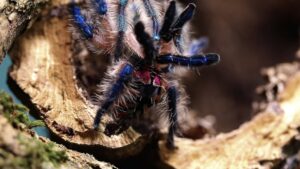
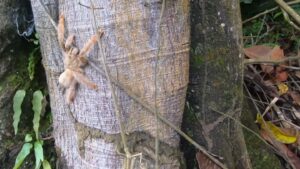
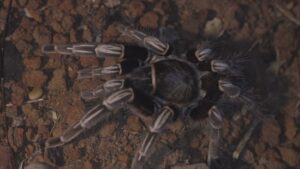
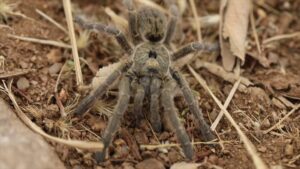
We went to the published type-locality area in Yucatan to look for Tliltocatl epicureanus. Our field notes record both T. epicureanus and T. vagans during the trip. The photographs and video preserve what we saw, but they are not a specimen-based taxonomic determination.

The encounter
Other visitors were exploring the same place while we searched. When we found a tarantula, we could show them the animal and explain what we were documenting. That small exchange became part of the day, alongside the photographs and field notes.

What the name means now
The accepted name is Tliltocatl epicureanus (Chamberlin, 1925), in the family Theraphosidae. The World Spider Catalog lists it as an accepted species from Mexico.[1] Chamberlin originally described it as Eurypelma epicureana in 1925. His paper gives the type locality in Yucatan.[2]
Mendoza and Francke established Tliltocatl in their 2020 revision and transferred this species from Brachypelma. The current spelling is epicureanus.[3] This is narrower and more accurate than saying that every red-rump tarantula moved into one new genus. For two Mexican Brachypelma species that stayed in that genus, see the Smithi vs Hamorii comparison. Another Tliltocatl species, the curly hair tarantula, has its own page: Tliltocatl albopilosus (formerly Brachypelma albopilosum).
The provisional Aphonopelma mooreae identification shows why a catalogued range and a specimen identification must be treated separately.
Habitat recorded on the trip
The trip also gave us time to photograph the wider setting: clear water under tree cover, shaded forest, leaf litter, exposed soil, and old stone structures. After a hard day of searching, swimming in a cenote was welcome.


Watch the field video
Field footage from the Yucatan Peninsula, Mexico: we search near Maya ruins for the Yucatan red rump tarantula and find one.[4]
More animals from the area
We photographed the field-identified tarantula in more than one position and also recorded a jumping spider from the family Salticidae. The jumping spider is shown here as another animal from the area, not as a species-level identification.


Notes from the field, by email
I send a short tarantula briefing by email, with field notes from our trips written for the newsletter when I have them, and once a month a roundup of new posts. It is free, and you can unsubscribe at any time.
Later, if you want to support the fieldwork and the films, I am also on Patreon.
References
- World Spider Catalog. Tliltocatl epicureanus (Chamberlin, 1925). Current accepted name, family, distribution, type repository, and taxonomic history.
- Chamberlin, R. V. (1925). New North American spiders. Proceedings of the California Academy of Sciences 14: 105 to 142. Original description and published type locality.
- Mendoza, J. and Francke, O. (2020). Systematic revision of Mexican threatened tarantulas Brachypelma, with a description of a new genus, and implications on conservation. Zoological Journal of the Linnean Society 188(1): 82 to 147. Establishment of Tliltocatl and transfer of the species.
- birdspidersCH. Mexican Red Rump Tarantula living at Wonder of the World (Official Video 4K). Primary field video from this trip.
Supporter photographs
The existing supporter section contains behind-the-scenes photographs and personal pictures from the same trip.
[ppp_patron_only level=”2″]