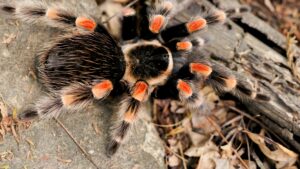
The original record presents this tarantula as an Ecuadorian member of the subfamily Theraphosinae. It does not identify the animal to genus or species. That makes the photograph a starting point for identification, not a basis for species-level natural history or care advice.

What the photograph can and cannot establish
The page records one animal and an Ecuador provenance. It does not state who made the subfamily identification or provide a collection locality, sex, life stage, measurements, specimen history, or diagnostic views. Until those details are available, the identification should stop at the level given in the source.
A large and varied subfamily
Theraphosinae is a New World tarantula subfamily. A modern overview by Pérez-Miles and Perafán treats its taxonomy and diversity, while the World Spider Catalog provides the current accepted names for the family Theraphosidae. Neither source assigns this photographed animal to a genus or species. Pérez-Miles and Perafán, 2020; current Theraphosidae genera
Because the subfamily contains many genera, a single temperature, humidity, substrate depth, feeding schedule, or handling recommendation would be misleading here. Those details require a defensible identification and a documented husbandry record.
For another South American theraphosine record, see our Theraphosinae from Pedra Azul. The unidentified Ecuadorian specimen page follows the same evidence-first approach.
References
- Pérez-Miles, F. and Perafán, C. 2020. Theraphosinae. In Pérez-Miles, F., editor. New World Tarantulas, pages 121 to 151. doi:10.1007/978-3-030-48644-0_5
- World Spider Catalog. 2026. Theraphosidae genera, current catalog. Natural History Museum Bern. https://wsc.nmbe.ch/gen-list/100/taxon
- World Spider Catalog. 2026. Version 27. Natural History Museum Bern. doi:10.24436/2