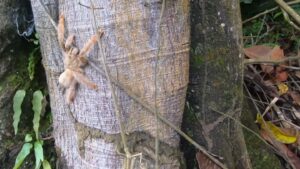
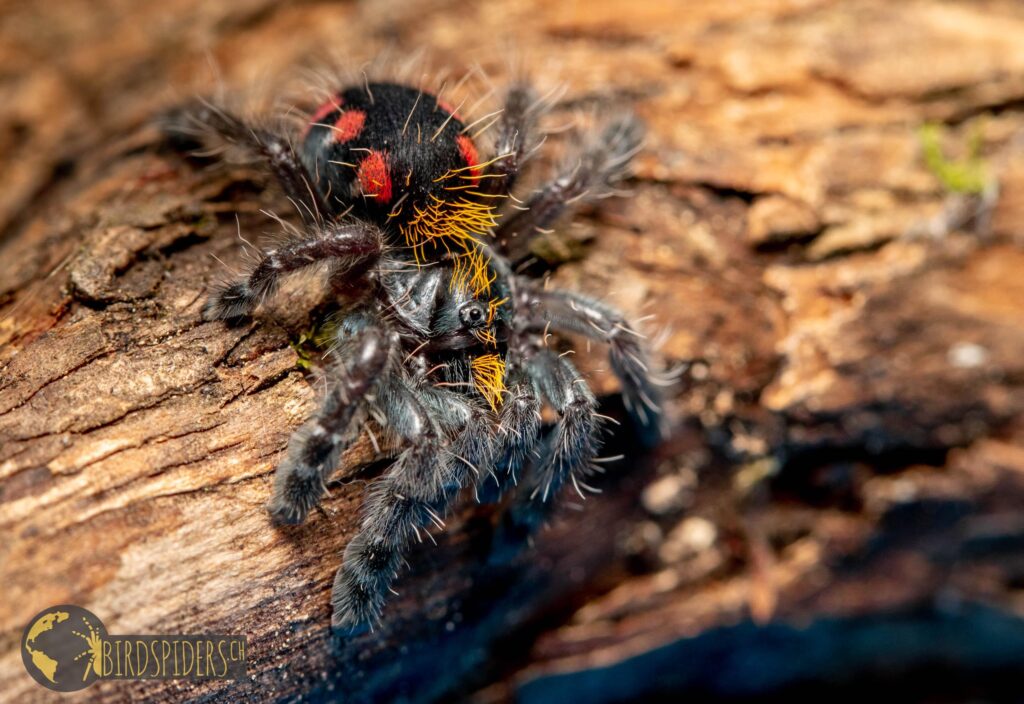
We usually photograph tarantulas in their native habitat. This Typhochlaena costae was an exception: a captive-bred animal photographed at a European breeder’s facility while travel was restricted. This page is a visual introduction. The sourced taxonomy and natural history sit in the linked articles below.
Video
Captive footage from friends’ breeding collections, showing Typhochlaena costae and two other Typhochlaena species alongside published field studies on habitat and conservation. For a fact-checked account of the accepted name, diagnostic characters, and Brazilian distribution, read the Typhochlaena costae species profile. The Typhochlaena costae retreat article separates what our photograph shows from what later field literature reports. For another jewel tarantula in the same genus, see the Typhochlaena seladonia profile.
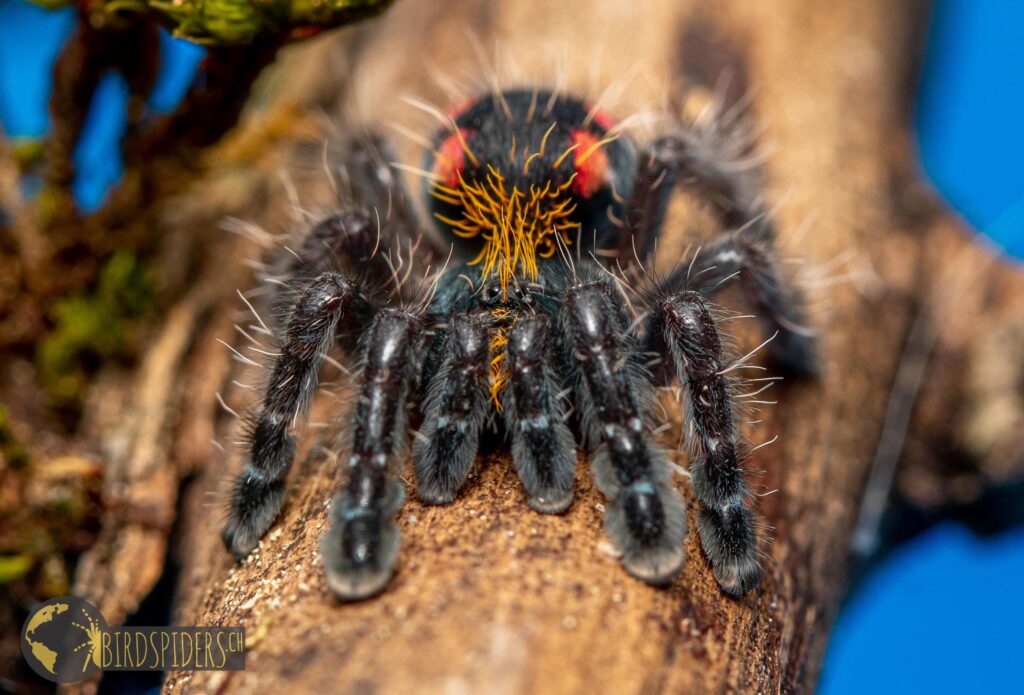
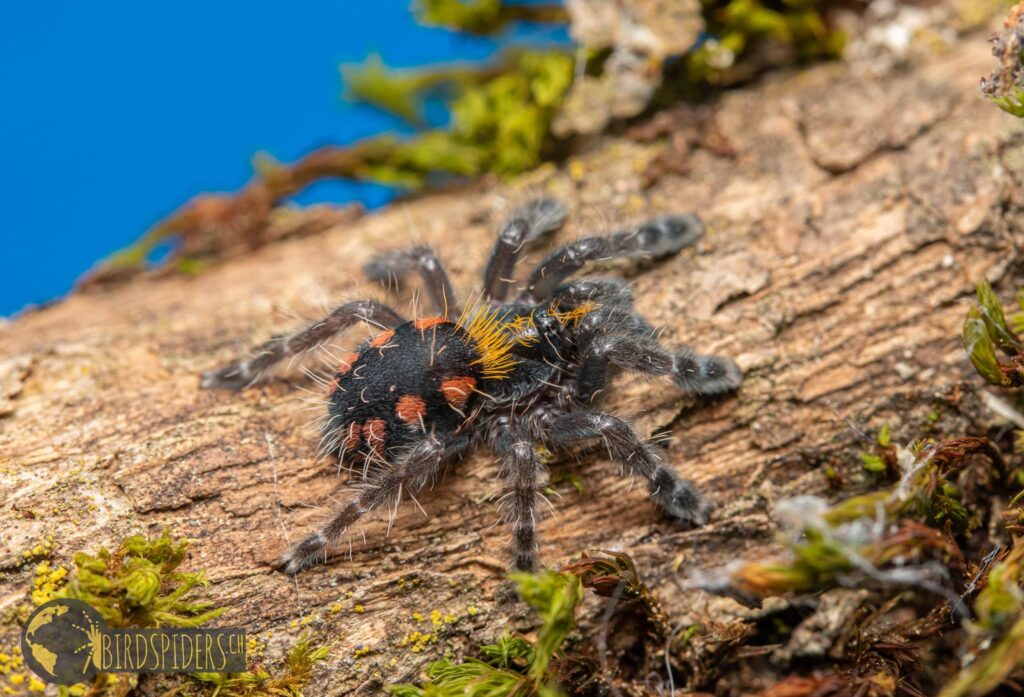
The World Spider Catalog accepts Typhochlaena costae Bertani, 2012 as a species from Brazil. Bertani’s original description records material from Tocantins, Maranhão, and Piauí. World Spider Catalog; Bertani, 2012
Field studies of the genus and of this species’ habitat are in André and Hüsser (2016), André and Hüsser (2018) and André (2019). The 2019 paper reports that Typhochlaena costae lives in arboreal trapdoor retreats in central Tocantins, Brazil.
These pictures and the video document a captive-bred specimen. They are not records of the animal in Brazil, and they are not an invitation to remove spiders from the wild.
References
- Bertani, R. 2012. Revision, cladistic analysis and biogeography of Typhochlaena, Pachistopelma and Iridopelma. ZooKeys 230: 1-94. doi:10.3897/zookeys.230.3500
- World Spider Catalog. 2026. Typhochlaena costae Bertani, 2012. Natural History Museum Bern. species record
- André, C. & Hüsser, M. 2016. Die Gattung Typhochlaena: Historie und Systematik sowie Habitat und Lebensweise von T. seladonia, T. costae und T. curumim. Arachne 21(3): 4–33.
- André, C. & Hüsser, M. 2018. About trapdoors and bridges: new insights in the little-known ecology and lifestyle of the genus Typhochlaena C. L. Koch, 1850. Journal of the British Tarantula Society 32(3): 3–29.
- André, C. 2019. Tree selectivity by the theraphosid spider Typhochlaena costae Bertani, 2012 (Araneae, Mygalomorphae, Theraphosidae). Journal of the British Tarantula Society 34(3): 22–41.