Brazilian jewel, black, salmon pink, white knee and red and white are hobby names, and each points at one species …
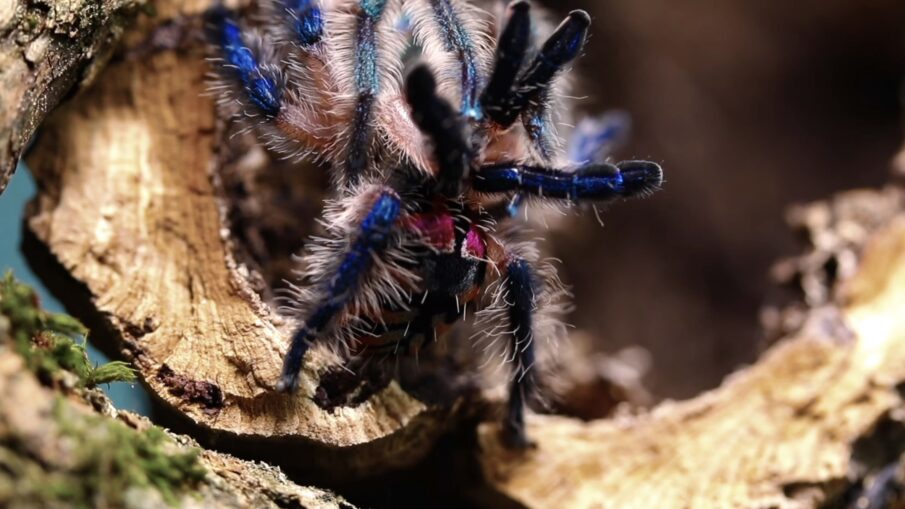
Brazilian jewel, black, salmon pink, white knee and red and white are hobby names, and each points at one species …

Arboreal tarantulas are the ones that live above the ground, on tree trunks, in bark holes and in silk tubes …

Tarantulas are sorted three ways: by continent (New World or Old World), by how they live (in a burrow, on …

A baboon spider is a tarantula from Africa. The name belongs to the family Theraphosidae and is used most for …

Most tarantulas have eight small eyes, bunched on a raised patch at the front of the carapace.12 What comes up …

Scolopendra gigantea is the giant centipede of northern South America, also called the Amazonian giant centipede or the Peruvian giant …

Coremiocnemis hoggi, the Malaysian purple femur tarantula, is a burrowing tarantula from the highlands of Peninsular Malaysia. Rick West and …

Yes. A tarantula is a spider: it has eight legs, two body parts, a pair of pedipalps, silk glands and …

Davus is a genus of small tarantulas, the tiger rump tarantulas, with four accepted species from Mexico to Panama: D. …

Some are, but very few tarantulas have ever been assessed. As of October 2026 the US Fish and Wildlife Service …